
On this page
- 1. Measure acidity and water activity on the real recipe
- 2. Know what the SFCR asks of low-acid sauces
- 3. Pick a filling approach that matches the formula
- 4. Match the container to the process
- 5. Build the label around Canadian requirements
- Your sauce pre-meeting checklist
- Sauce co-packing with COPACK Canada
- FAQ
A sauce recipe that works perfectly in a restaurant kitchen can still stall at the co-packer. The usual culprits are numbers the founder hasn’t measured yet: acidity, water activity, the temperature the sauce goes into the container, and the label claims that follow. Settle these four early and your first sauce run gets much simpler.
1. Measure acidity and water activity on the real recipe
Canada’s Food and Drug Regulations define a low-acid food as one in which any component has a pH above 4.6 and a water activity above 0.85. Low-acid foods in sealed containers carry a risk of Clostridium botulinum, so they sit under the strictest rules.
Many hot sauces, vinegar-based dressings, ketchups and salsas are formulated to stay at or below pH 4.6, either naturally or by adding acid. Creamy, oil-rich, vegetable-heavy or low-salt sauces can drift above it. Test a finished batch made the way it will be produced, not a test-kitchen version, and test each component if your sauce has chunks.
2. Know what the SFCR asks of low-acid sauces
Section 48 of the Safe Food for Canadians Regulations requires that a low-acid food in a hermetically sealed package be given a scheduled process, a defined thermal treatment, and that documents describing it be kept, including who developed the process and the product formulation. Records of each application, such as temperatures, deviations and corrective actions, must be kept for three years.
There’s one important exception: the scheduled-process requirement doesn’t apply if the low-acid food is kept refrigerated or frozen and the principal display panel says “Keep Refrigerated / garder réfrigéré” or “Keep Frozen / garder congelé.” That’s why some sauces that can’t be acidified end up in the refrigerated aisle.
3. Pick a filling approach that matches the formula
| Approach | How it works (in general terms) | Typically suits |
|---|---|---|
| Hot-fill | Product is filled hot so the heat treats the container and closure | Acidic, shelf-stable sauces |
| Cold-fill | Product is filled cool; safety relies on formulation, refrigeration or other controls | Heat-sensitive or refrigerated products |
| Retort / validated thermal process | Sealed containers are heat-treated to a scheduled process | Low-acid sauces meant to be shelf-stable |
Alberta’s co-packing guidance notes that the same product can often be made several ways (cold-filled, hot-filled, aseptically processed or pasteurized after filling) and that each route changes equipment, lead time and cost. Ask any co-packer which approach it recommends for your formula and why, and have your process validated by a qualified food safety professional.
4. Match the container to the process
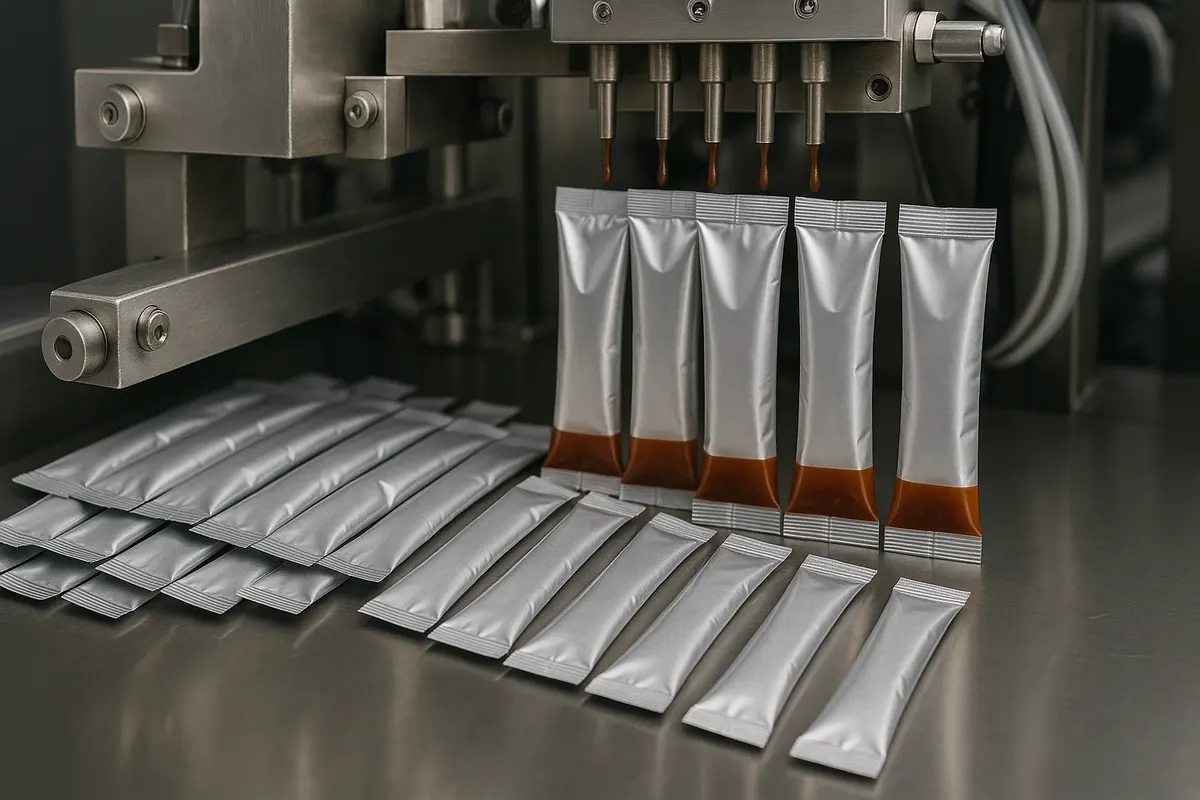
Glass tolerates heat well and reads as premium but is heavy and breakable. Plastic squeeze bottles are lighter and easy to use. Flexible pouches cut freight weight and suit food service and refills, provided the film and seal are rated for your fill temperature and barrier needs. Container integrity is a safety issue: CFIA guidance on commercially sterile low-acid and acidified low-acid foods treats swollen containers and lost hermetic seals as serious defects, and inspectors look for a legible code showing where and when the food was processed. Our packaging formats guide compares options.
5. Build the label around Canadian requirements
The CFIA’s labelling checklist covers the essentials for nearly every prepackaged sauce: a common name and metric net quantity on the principal display panel; an ingredient list in descending order with priority allergens, gluten sources and added sulphites declared; the dealer’s name and principal place of business; a best-before date if durable life is 90 days or less, plus storage instructions where needed; a Nutrition Facts table unless exempt; and mandatory information in English and French.
Condiments deserve extra allergen care, since mustard, sesame, soy, wheat, fish, crustaceans and molluscs, and sulphites, all priority allergens in Canada, turn up often in sauces, marinades and dressings. And since January 1, 2026, labels must comply with front-of-package rules: prepackaged foods at or above Health Canada’s thresholds for saturated fat, sugars or sodium need the “High in” symbol. Many sauces are high in sodium or sugars, so check before you print.
Your sauce pre-meeting checklist
- Recipe by weight with ingredient specs
- pH and water activity on a finished batch
- Target shelf life and storage: ambient, refrigerated or frozen
- Preferred container and closure, plus acceptable alternatives
- Volume per run and per year
- Ingredient and packaging sourcing needs
- Where you’ll sell, since interprovincial sales bring SFC licensing into play
Sauce co-packing with COPACK Canada
COPACK Canada’s sauce co-packing covers hot sauce, BBQ sauce and more, with recipe support and scalable batch sizes, bottles, jars and pouches, labels set up for regulatory and retail requirements including lot coding and traceability, plus ingredient sourcing, storage and distribution. Bring your checklist to a free quote request.
FAQ
What pH does a shelf-stable sauce need?
Canada defines low-acid foods as those with any component above pH 4.6 and water activity above 0.85. Sauces formulated at or below pH 4.6 fall outside that definition, but acidified products still need tight pH control and a validated process.
Can a low-acid sauce be sold without a thermal process?
Only if it is kept refrigerated or frozen and labelled “Keep Refrigerated” or “Keep Frozen” in both official languages on the principal display panel.
Can I switch from bottles to pouches later?
Yes, but treat it as a new process: confirm the pouch suits your fill temperature and that seal integrity is verified.
Sources
- Food and Drug Regulations, section B.27.001 (laws-lois.justice.gc.ca)
- Safe Food for Canadians Regulations, section 48 (laws-lois.justice.gc.ca)
- CFIA, Visual examination of commercially sterile low-acid and acidified low-acid foods (inspection.canada.ca)
- CFIA, Food labelling requirements checklist (inspection.canada.ca)
- Health Canada, Front-of-package nutrition symbol (canada.ca)
- Health Canada, Common food allergens (canada.ca)
- Alberta Agriculture and Forestry, Co-Packing – Food Industry – What to Know (2020)
This article is general information, not legal, regulatory or food safety advice. Confirm requirements with the CFIA and a qualified advisor.